Friday, March 27, 2026

A Real-World Industry-Academia Project Journey

Today the academia industry collaboration has become a pivotal driver of innovation, bridging the gap between theoretical advancements and real-world applications. Universities provide the blue-sky and nurture the talent pool to shape the future, while industry from manufacturing to the creative arts, realizing economic and societal impact of innovation. 

Having said that, I must share the story of our accidental discovery that led to a productive molecule that gained interest for academic research investigations to explore its applications as a bioactive molecule, showing potent anti-microbial activity.

This was two years back when we were working on developing non-infringing route for Gefitinib, the Oncology API. We were developing a six steps scalable chemistry and further filing for IP right. In the second step of nitration on commercially available methyl isovanillate, we observed some abnormal TLC pattern. That triggered us to further characterise this accidental molecule NMR and Mass. Mass data clearly showed this was not mono- but dinitro product. Then next based on NMR data and splitting pattern, we confirmed that the structure of this molecule matched following structure. Later when searched we could see this product already in literature with defined CAS number. Later it further confirmed by comparing the NMR data this accidental product with literature NMR data. Therefore, we came to conclusion that this is dinitro aromatic compound with name Methyl 3-hydroxy-4-methoxy-2,6-dinitrobenzoate (MMDB) with its CAS number: 1261079-62-2.

I have the habit of sharing interesting outcomes/news on social media. So, as soon as the product is confirmed, I shared this on LinkedIn as the “Accidental Product” from our company: SudhiShubha ChemSynthons, Bangalore. The purpose was to bring this accidental discovery to public domain, so that if anybody interested to explore it’s applications, we were open to collaborate.

Interestingly Dr. Gagandeep Singh, Scientist from Microbiology, Central Ayurveda Research Institute, Jhansi, Uttar Pradesh, India expressed his interest to take this product further to explore it’s biological studies. Without a second thought, I simply agreed to collaborate and agreed to supply the material. A thorough investigation was made to study it’s Antimicrobial, redox and developmental toxicity profiles in vitro and in zebrafish. A team of Scientists from other four different colleges (IIT Delhi and affiliated to Delhi University)

[The paper published: The Microbe Volume 10, March 2026, 100694].

The study highlighted in the publication.

  • Remarkable antibacterial activity against both Gram-positive and Gram-negative strains—including multi-drug-resistant (MDR) pathogens—at doses as low as 50 µg/mL.
  • Potent antibacterial action and antifungal activity against C. albicans, P. notatum, and A. niger.
  • Multifaceted Profile: Shows promising antioxidant and anti-inflammatory properties.
  • Safety First: Toxicity profiling in human cell lines (HEK293T, 4T1, MDA-MB-231) and zebrafish models

These findings were very promising positioning MMDB as a strong lead compound for future clinical applications and lead optimization studies. Secondly this publication did not come quickly, it is the result of nine months continuous effort by Dr. Gagandeep Sir to try 3-4 journals and never give-up attitude finally gave this paper. This is great news for whole team, who took part in this endeavour. That is why it is quoted that “Science is a team sport, and everyone played their part in this team effort.

In my perception, this is great effort towards bridging-gap between Academia and Industry to bring our great discovery or product that is impact on real world.

For SudhiShubha ChemSynthons, Bangalore, a research driven startup in chemical science, this is second achievement after we successfully developed non-infringing route for Gefitinib. An Oncology API, which was further taken by JSS College of Pharmacy, Mysore to file Indian patent for this API synthesis. This patent also got published and waiting for this patent to be granted.

When like minded people work together to make difference successful Academia-Industry collaboration can be possible in our country also.

I am thankful to students who worked on this project, the collaborators from Academia and publishing committee for making this dream come true. 

Wednesday, February 2, 2022

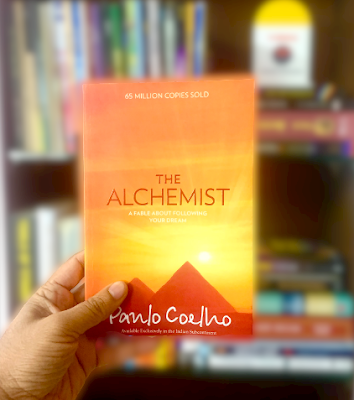
The Alchemist: A Journey Towards the Destiny

A good book is like a treasure, which always has place in the bookshelf for generations to read.
 
Last week, I finished reading a famous book entitled “The Alchemist”, written by a Brazilian author Paulo Coelho, which I bought few weeks back at a book fair. Although it is a fictitious novel, but I so badly moved away with the story of this book that, I am still not able to come out of it. To summarize in three points, this story tells about, following your dream, listening to your heart and never giving up when you are on the mission to conquer the destiny.
 
Is this all about the story of this book? No, there is much more to be learnt from the story. More important is, the author’s effort to convey his message or thoughts using simple and elaborative language, which makes you feel that you will feel to relate yourself to the main character of the story. As you go on reading, you will feel that at many points, the story relates to your life.


The story begins at a small village in Spain, where a shepherd boy named Santiago, while sleeping below a tree near an old church, sees a dream of a treasure hidden below Pyramids of Egypt. Confused with the dream, he meets a Gypsy woman and share about his dream. She says, this dream has shown him his destiny (Finding the treasure below Pyramids in Egypt), for which he has to travel all the way to Pyramids to find that treasure. He gets embraced when one more old man, he meets at a market claiming the king of Salem says the same thing what the Gypsy woman told. Furthermore, the old mans says, the dream has came out of soul of universe, so it is boy’s of life to go there and the whole universe will conspire to reach the destiny. The boy has left with no other option and he begins his journey towards Egypt. A very long journey, which offers him to visit many places and good as well as bad people. If some of them helps him where as some others will rob his money and belongings. A time will come, when he loses everything, he has. Not even having money to buy anything to eat. At that moment, he thoughts of giving up his travel to Pyramids. Somehow, he meets an Arab merchant, who sells crystal glass utensils. Although his business was hand to mouth, but he helps boy to give a job. The boy Santiago stays there for some years, giving new business idea to merchant to excel in his business and in turn he gets more salary. After couple of years, he acquires enough money. There comes the thought to drop the idea to travel to Egypt and to go back to Spain, buys sheep and live usual life. But, his heart warns him that, he has already travelled long and few more weeks to reach Pyramid (Destiny), so if he gives up at this find, he will have to regret whole life for not accomplishing the dream. He again continues his journey, listening to his heart, reaches Sahara desert, meets the Alchemist, a man who learn scientific techniques to make gold from lead from his ancestors. The Alchemist repeats same, what the old man told him in market. But, he promises to help the boy to give company to reach till his destiny. While crossing the desert towards Egypt, the Alchemist shares his life experiences and learnings to boy. He also tells the importance of listening to the heart, which knows the purpose of life. Finally on one fine day, boy succeeds to reach Pyramids and tears of joy flow out from his eyes. What a destined journey and what a life learning experience.

At the end, whether he finds treasure there? What happens next, is secret that I should not reveal, for the simple reason to motivate people to read this book.

Apart from all that has been told, what I felt personally after reading the book is, in the journey of life, whatever the place you visit and whomever you meet is not accidental. There is some purpose behind that. You will realize only when you connect those visits or meetings, you can realize there is a purpose for everything that happens to help you to achieve your destiny………

Tuesday, September 21, 2021

My Experiences with Column Chromatography.

Column chromatography (Silica or alumina) is one of the conventional methods, globally accepted for purifying of different class of organic compounds. As everyone is aware of, it includes glass column, silica or alumina stationary phase, eluting solvent mixture with different polarity. I have some interesting experience with this purification technique in my professional career, that I am going to share in this write-up.

Although my first experience with column chromatography was in my master course, but that was just for training/education purpose, where in I had little chance to learn or experience much.

Till now, I worked in almost seven professional research laboratories and among them, six laboratories I worked were pure organic synthesis labs (Including academic and industrial). Every time I joined the new laboratory, I have to face new challenge as the method followed in each lab for this technique was totally different. In the first laboratory (Bharavi), where I first got the professional experience, the method used was, for 1 g crude material 10 g silica was standard and if the spots are very near on TLC, for 1 g crude material 20-30 g silica. But the particle size of silica usually used was 60-120 mesh. Based on the quantity of silica used, column width and length was considered giving enough space for solvent above silica bed. My second job at NCL, Pune was again different from first one. Here the diameter of column was main factor. For 1-2 g crude, column dia should be 2-3 cm and length approximately 30 cm. For 5 g and above, the dia should be 10 cm, etc. Here again, the silica particle size was 60-120 mesh. Then I moved to Japan for PhD course at Nishino Laboratory at Kyushu Institute of technology, headed by Prof. Norikazu Nishino. He was typical Japanese Professor, very particular about the techniques and methods. He made a rule that, we have to use formula of volume of cylinder to measure the amount of silica, where in diameter and heights were variables based on quantity of crude material. So, we used to measure the silica quantity in ML in conical flask based on calculation. Here also for normal separation 20 cm height and for critical separation 30-40 cm height. Diameter again was same as in NCL, method. Here since the compounds were amino acid and peptide based polar compounds, dichloromethane and methanol were usual solvents, but silica particle size was fixed as 230-400 mesh. After finishing PhD from Japan, I moved to USA to work as postdoc in Holton laboratory at Florida State University. Here, like many US laboratories, Prof. Holton made an SOP of Flash column chromatography to purify the compounds. Obviously, the solvent selection was based on polarity of molecule (Hexane/Ethyl acetate or DCM/Methanol). Flash here means, silica particle size should be 230-400 mesh and slurry should be made in solvent mixture which give 0.2 Rf value for desired spot. Once the crude is made slurry by adsorbing on silica, it is loaded on stationary bed and then pressure is applied from top using nitrogen, so that the column should complete maximum in one hour. After moving to second postdoc at Kyushu Institute of Japan again to work in Hayase laboratory. In this lab, I had some freedom to follow my own method, as I was the senior organic chemist there. We here were working mostly on planar conjugated dyes, so there was possibility of forming aggregates, hence separation was tedious. I mixed up all my previous experiences and adopted my own method by using 230-400 mesh silica particle size and 30 cm length column, using DCM/Methanol solvent mixture (Polar compounds), but only difference is, I failed to make slurry for these dyes in silica, so I used to dissolve the crude in minimum DCM and load on stationary bed and drain. I also used to apply pressure if needed using nitrogen gas. Having spent in those previous labs, I returned back to India and started my industrial career in reputed MNC, Sigma-Aldrich (Now Merck), I again have to face new method of column technique which was as per SOP. In industries, following SOP is mandatory and its matter of compliance. Here, although the methods were somewhat matching some or other previously learnt methods, but difference here was, we use to use 250 ml, 500 ml, 1 lire and 2 liter columns volume based on the quantity of crude material and height was normally 30 cm. Since most of the compounds were moderately polar, dealing with hexane and ethyl acetate was routine business. Rarely we used to use DCM/methanol solvent mixture (Particularly for acids, amides etc). Although majority of us used 60-120 mesh particle size silica, but there were some fascinate people with lots of patience, who used to use 230-400 mesh particle size silica, with pressure applying from top by nitrogen gas.

Column chromatography, theoretically works on same principle (Adsorption and polarity), but every lab I joined gave me different experience, due to different technique practiced in that particular lab. In one lab, if silica is measured in grams, in other lab it was measured in ML. Height of the stationary phase was dependent on space between spots on TLC. If one lab followed gravity column, others followed pressure column to save time. Whatever may be the technique practiced, the purpose was same, that is purifying the compound to achieve highest purity.

To conclude with, what I can say is, column chromatography although looks simple, but there is no fixed method followed globally. It is a lab specific method, and purely depends on individual skill set. Every lab follows that particular skill set, that is comfortable to purify the compound. Not only column chromatography, there are many such techniques followed in organic synthesis labs, which as purely skill based, which makes organic chemistry interesting experimental science.

Friday, June 4, 2021

Total Synthesis: A topic of choice for PhD

The doctor of philosophy, in short PhD, is the highest academic degree considered globally, which involves completion of a set of tasks as per the regulations of particular University. To begin with, choosing a right topic for your PhD dissertation is one of the fundamental tasks. The topic one chooses should be unique, different and realistic, having tremendous research scope for one’s future career. Usually it is advisable to go through previous research records of that particular research group such as theses, research reports or publications and frame a research topic that is continuation of unsolved or partially completed previous research problem. There is also chance that the supervisor may design some interesting topic for you, that may or may not relates to his/her ongoing funded research project. Overall, it is critical step on PhD course.

When it comes to Organic chemistry, there are multiple career options post PhD. So the choice of a research topic should be in such a way that, it should be a foundation for diverse career options, giving wholesome training of 4-5 years to improve skillsets and theoretical knowledge of the graduate student. In that sense, Total synthesis of natural products can be considered as the great choice of topic. As it is known that total synthesis of natural products is a complete synthesis of natural products which are known to be complex molecules bearing chiral centers and diverse functional groups. Considering a natural product molecule and working on its total or partial synthesis not only gives the knowledge about retrosynthesis, but also it gives exposure to handling various reagents, catalysts, bond formation/bond breaking reactions, functional group transformations and also gaining experience in performing several named reactions. Starting from designing a synthetic route on a paper to setting a reaction to isolating and purifying the product, there are n-number of important steps and techniques that one needed to get trained, if he/she wants to make career in organic chemistry. In other words, natural product synthesis is the plethora of knowledge as per as organic synthesis is considered. Therefore, when one comes out after finishing the PhD course in this core topic, he/she will gain a complete training package of both theoretical and practical aspects of synthetic organic chemistry, which is basic need for both academic as well as industrial career. Having obtained with this basic training, one can easily move to different applied research areas of organic chemistry, if one desires to go for Postdoc or as faculty or as industrial chemist.

Saturday, December 5, 2020

Industrial jobs: Understanding the needs and nature of work

Career hunt is one big nightmare after academic training. May it be MSc or PhD or Postdoc or any related training course, at the end of every academic course, the question triggers our mind is, “I am done with it, now what is next??” 

Fortunately, chemistry is one subject, where in there are multiple options, when it comes to choosing career after completing academic course. I am sure many of you are near to the ending your PhD and are in same ambiguity about future. After PhD, some of you may be planning for a Postdoc training. Again, there may be multiple reasons to choose postdoc job. It may either be as need for academic job or for added exposure to become independent researcher or just because you didn’t get an industrial job, so thought of doing postdoc and then trying for moving to Industry. Some may be planning to join academia after PhD. Some of you after 4-5 years of rigorous training with acquired skills in your PhD and now must have decided that, you are fit enough for industrial job, so deliberately trying an industrial position. Same ambiguity will surpass your mind even when you are concluding your Postdoc career. If everything goes well, you may end-up in an academic position, for which you spent 2-3 years of time as postdoc. But if that didn’t happen then again you will start thinking what to do and one option that may drag your attention is Industrial job. Now you are more trained than MScs or PhDs, because you have spent some extra years as an independent researcher, you worked on the problems that you proposed, independently wrote papers, presented your work in conferences. So, definitely you will think, now I am more experienced and good asset for an industry, I can independently handle projects/teams and etc etc. 

Excellent!! All that you thought is perfectly fine. Now, let me share some of my own views, which may be helpful, if you are stepping towards for industrial job. Again, there is nothing compulsory that what I am telling is ultimate truth. 

You may be an MSc or a PhD or a Postdoc, gained enough experience/training in your academic course and now trying for industrial job. All that you gained is fine and perfectly acceptable, but my friends, when you step into an industrial job, you are again a fresher as per the requirements of this job, because industrial job is a different ball game. There are hell number of things that are completely different from what you learnt in academia. The very first difference I can quote is the TARGET. In academia, it is either your supervisor or the scrutiny or you yourself may set the target to work on it and it is lead time is flexible based on circumstances. But in industry the biggest challenge is, it is the Customer, who gives you the Target, with tight lead time. You have no other option, than to commit to the target and to meet it in given lead time without any fail. Because, your customer who gives you target has options and those options may be your competitors, so you have threat of losing the business to your competitors. You will hear many new terms such as times lines, lead times, KPIs (Key performance indicators), KRA (Key result areas), commitments, deliveries, performance and many more. There will be hell number of documentation processes and filings, quote makings, managing enquiries, client interactions, modes of reports writing, presentation of results at inter/intra department or at client levels. 

Basically, industrial jobs are skill-based professions and your performance is evaluated based on how efficiently you reach the target in given time, maintaining timelines through proper planning. Your role as a team player and sometimes as individual contributor will be monitored in any project you are working. Therefore, all that you acquired in academic course will not be enough to be considered, hence you need a training again after joining as a beginner to become familiar with the nature of industrial job and also to understand the roles/responsibilities. You may be from premier university/institute, worked with big named Professor, published great papers, but as I told, it is the skill based job, you may confront with the situation, where you have to report to one of your colleague, joined several years before you, having more skills or experience, but less graduate than you. Your number of papers, conference presentations or novelty of your research work hardly matters in industry. You may have worked in particular research area, but here there is nothing like specific and you will be given projects from various areas having different applications. Overall, let you be junior, senior, team player, individual contributor, manager, boss, but as a whole this is a Team game, where everyone has to work as a team in broad sense for fulfilling customer needs, revenue generation and overall growth of business. That’s how your job and companies growth prosper to next level year by year. 

The journey of life takes many turns and many times we fail to notice. We dream of something and something else happens, that is what life is all about. In today's competitive climate, when the secure jobs are lacking, to be successful is all about having the strong drive to push forward even when you are struggling. There is nothing wrong in choosing Industrial profession. Like many jobs, industry is also a great and challenging place to work with passion and learning. There are huge opportunities to grow professionally and financially. 

As a concluding remark, your PhD is simply a training course to make you a professional researcher. It opens up the gate for the research career. In broad sense all these PhDs, Postdocs are simply stages coming in the huge canopy of research profession. You may aim for academic career or industrial life, but for both options PhD is the first stage. Postdoc training is necessary when you opt for academic career. Otherwise it is not helpful in anyway, if you seriously think of moving to industrial job. Postdoc will simply delay your professional growth in industry. At the same time, I can not deny that recently for few industrial jobs such as discovery CROs postdoc experience is being considered as an added asset. There are also complaints regarding industries asking experience. This is definitely a debatable topic, but if experience is really a need, you still can opt for trainee positions in many industries at lower wages for couples of years and thus can acquire industrial experience certification for permeant positions in Industry. It’s your life and you have to make decision. Therefore, choose the path smartly and understand the path completely, before making any decision.

Sunday, June 28, 2020

Modern and traditional medicines.

Modern Drug discovery has very much advanced with many new techniques to ease the process. With the evolve of computational chemistry, it became easier to simulate structures of drug target proteins and their binding affinities with small molecules and thus helping to design new library of molecules. X-ray crystallographic studies are yielding the structures of target proteins and their active sites. Sequencing the genetic codes of micro-organisms such as viruses, giving the information about microorganism’s DNA/RNAs and related proteins. Based on these techniques, process of target validation, new molecules library design, their synthesis in thousands of numbers and finally are screened for their inhibitory activity against target protein through in-vitro and in-vivo methods. Among thousands of screened molecules, few may hit as lead compounds for animal study. Then phase clinical trials, ADME, FDA approval and finally commercialisation. 

Now, if we trace back the history of drug discovery process, when there were no such modern techniques, majority of new drugs discovered were the bio-active molecules isolated from crude plant extracts, algae, fungi etc. whom scientists either discovered through serendipity or by thorough screening of crude plant extracts, which were given to patients in traditional medicine system. Until Quinine alkaloid was discovered as bio-active molecule present in Cinchona bark extract, this extract only was given as medicine for treating Malaria. The extracts of Taxus brevifolia plant were believed having anti-cancer activity, until people discovered the bio-active molecule Taxol was main content of this extract, which has potential to arrest mitotic cell division in tumor cells. The anti-inflammatory drug Aspirin was once isolated from Spiraea ulmaria herb. Penicillin, the first antibiotic drug, which ruled the world for decades, was first extracted from a Fungi.

Historically, every country, culture and civilisation in some or other way had practised traditional therapeutic system by using crude extracts of many plants and their parts by trial and error base over generations. Let it be European traditional medicine, Chinese herbal treatments, Persi-Arabic Unani medicinal practice, homeopathy Or our Ayurveda, all these systems were dependent on herbal resources.

Agreed that Ayurvedic medicinal practices does not fit into modern drug discovery processes, as this method lacks data to establish drug-target interaction and many more, but at the same time one cannot ignore that those herbal medicines made from crude extracts of many medicinal plants do have the biological activities. We never know, there may be treasure of bio-active molecules present in those medicines/extracts. Therefore, a thorough investigation of those extracts/medicines to dig out what bio-active molecule is present in them, which is responsible for pharmacological property. Some countable number of natural product chemists such as Prof. Sukhadev, have worked in this line. Still more and more efforts should be made to do research on these Indian traditional medicines to discover many hidden novel molecules that in future may be cure for many diseases.

Wednesday, October 3, 2018

Are the breakthroughs in fundamental chemistry being recognized??

The Royal Swedish Academy of Sciences announced award of NobelPrize in Chemistry-2018 with one half to Prof. Frances H. Arnold for her discovery on "Directed evolution of enzymes" and the other half jointly to Prof. George P. Smith and Sir Gregory P. Winter on the "Phage display of peptides and antibodies". As usual it was disappointing to not that none of them were from fundamental chemistry field.

Since last 4-5 years we are seeing a trend that the Nobel committee is giving more preference to multidisciplinary research outcomes over hardcore chemistry. But at the same time, we also can not agree to the fact that there were no breakthroughs in fundamental chemistry in fast decade, which can be taken into account for the highest academic award (Nobel prize) nominations....…

I simply don’t understand………
  • Why Holton-Nicolaou-Danishefsky combination didn’t get recognition by scientific community for their work on the famous anticancer drug Taxol and its Total synthesis.
  • How come people didn’t see the groundbreaking research on Organic_dye sensitization of Nanoporous TiO2 semiconductors by Gratzel-Honda-Fujishima combination.
  • What made the intellects to not to nominate the invention of Flow_Chemistry and its industrial applications.
  • Why the great discovery of versatile Metallo-organic stable pigments such as Porphyrins and Phthalocyanines didn’t get recognition at global level for their enormous applications in wide variety of areas such as Photo dynamic therapy (PDT), material science, molecular imaging etc.
I still can list out some more of them and these were definitely the globally recognizable breakthroughs that opened the plethora of doors…Surely there is something missing among scientific community in chemistry discipline to honor and appreciate such breakthroughs........I am simply ambiguous to know what is that reason that is rendering the scientific community to appreciate the research outcomes from their own subject of interest.......

The question is left to readers......


Thursday, October 5, 2017

Nobel Prize to Organic Chemistry: Decreasing Frequency

Today, on 4th October 2017, the Royal Swedish Academy of Sciences announced the Nobel Prize for Chemistry. I was eagerly waiting to see any name from Organic chemistry field, but got disappointed as this year also no prize for hardcore Organic chemistry.

The Nobel Prize in Chemistry 2017 was awarded to Prof. Jacques Dubochet (University of Lausanne, Switzerland), Prof. Joachim Frank (Columbia University, New York) and Prof. Richard Henderson (MRC Laboratory of Molecular Biology, Cambridge, U.K.) for their extraordinary contribution to the developing of Cryo-Electron Microscopy for the high-resolution structure determination of biomolecules in solution. Many congratulations to all of them for their hard work and recognition and also felt happy to read more about Cry-Electron Microscopy technique.

If we trace back. since last seven years, no one from pure Organic Chemistry area got Nobel Prize. Recent one in the year 2010 for Palladium chemistry in Organic synthesis for Heck/Negishi/Suzuki and prior to that one in the year 2005 for Alkene metathesis to Chauvin/Grubbs/Schrock team and in 2001 for Chirally catalysed hydrogenation reactions to Sharpless/Noyori/Knowles team. This simply means, the frequency of getting Nobel prize in Organic chemistry is reducing, although there being many deserving Organic chemists worldwide. One reason could be, the current research trend of organic synthesis area is not matching with changing selection criteria of this highest scientific award.

We Organic chemists may claim of being the only applied discipline among other disciplines of Science, producing huge number of molecules having vast applications from biotech, pharma to material science areas. We have many deserving Giants in Organic chemistry field, who are famous for Total synthesis of complex natural products, new reactions/method development, synthesis of novel applied molecules etc etc., but when we see research areas of award recipients in recent past, it brings the feeling that we are far away from current day trend and it is a kind of warning too.

Just simply making new chemistry or molecules is not enough. There seems to be an immediate need for changing the trend and research focus. Today, the research outcomes that have INTERDISCIPLINARY FLAVOR, bearing significance to solving the REAL WORLD PROBLEMS are having more recognition in Scientific society.....


Monday, October 2, 2017

On The 10th Anniversary Of My PhD Degree Award Day.

On Sept. 30, 2017 exactly 10 years passed I got the PhD degree awarded at Kyushu Institute of Technology, Japan. In other words it is the 10th anniversary of my PhD degree. I celebrated that special day on social media and in that excitement I wrote a refreshing mail to my supervisor. As he is now 70 years old retired Professor, spending most of his time at home, easily available for interaction, replied quickly with happiness and full of regards wishing better future. It is very special day as it was one great milestone of my life.

Yes! It was my dream and ambition to pursue the highest academic degree, the PhD in Organic chemistry discipline. I could have taken some gap to pass CSIR-JRF exam and directly enter the course, but situations were not in favor of me. Therefore, I chose to work after M.Sc. While continuing my job, I kept on chasing my dream for which I gave a big fight. I knocked many doors, wrote mails, contacted many people, begging for admission to doctoral course. Later I got entry to NCL Pune, for which I must thank some of my friends/well wishers. Here again one more hurdle came, as the administration cancelled the policy of applying for SRF after working as RA for 1-2 years and made CSIR-JRF as compulsory requirement. Then, I had only one option left is to try for PhD abroad, which many of my colleagues were trying. I too followed the same process by taking guidance of my reporting scientists at NCL, Pune. On one fine day, I got admission for PhD at Kyushu Institute of Technology, Japan under the supervision of Prof. Norikazu Nishino. On 3rd October, I flied to Japan and started my dream course. Those three years of PhD course were hardest in my life. I worked very hard as it is culture in Japan. I still remember those sleepless nights, the toughest boss and his hard training. Published some papers and also presented my work in some conferences at Europe (Poland) and Tokyo, Japan. Finally after successfully defending my thesis work, I got awarded the PhD degree. That’s how I achieved my GOAL and I have to thank many of my friends and family who directly and indirectly helped and supported me in many ways.

Like a usual doctorate, I too carried out two Postdocs for more than five years. The first Postdoc was at Florida State University, USA, spending two years in the laboratory wherein Taxol synthesis was made a history. For second Postdoc, I again moved back to KyuTech, Japan to work for three years in the emerging area of solar cell research.

Having spent almost eight and half years in academia in abroad, acquiring vast experience in various research fields of interest, I decided to return back to my home land India. I dreamt of a career where in I will have enough freedom and flexibility to do what I want to do. As there is a saying that, “Sometimes reality becomes the strangest fantasy of all”, I found getting into my desired job was not so easy. Huge competition, need for papers published in top-tier journals, less number of openings and many more. For time being I dropped the idea of joining academia and thought of opting for other alternative paths where my training/skills can be explored. Finally the destiny brought me to the Industrial world and I started my career in the corporate organization as Scientist, nature of job being custom synthesis and contract research.

Industrial jobs are totally different from academic jobs. Here you don’t need multiyear Postdoc experience or more number of publications etc. Industrial jobs mainly need how skilled/trained you are to reach the target in given time. Maintaining timelines, meeting targets, planning, results and more importantly how efficient you are as a team player and as individual contributor are the crucial requirements in any industrial jobs.

Now when I look back and ask myself, what was purpose behind doing PhD, I usually get confused what to answer. I am also unable to answer, whether I really explored all the experience and trainings to bring them to reality. The journey of life takes many turns and many times we fail to notice those turns. We dream of something and something else happens, but that doesn’t mean one has to give up ones passion, the goals, and the ambitions. In today's competitive climate, when the secure jobs are lacking, to be successful is all about having the strong drive to push forward even when you are struggling.

I always receive many mails from future aspirants asking for guidance for joining PhD course and also information about Postdoc jobs. To all of you I can tell only one thing that, PhD is not a degree, it is a training course to make you a professional researcher. It opens up the gate for the research career. In broad sense all these PhDs, Postdocs are simply stages coming in the huge canopy of research profession. You may aim for academic career or industrial life, but for both options PhD is the first stage and without PhD further journey will not continue. Postdoc training is necessary when you opt for academic career otherwise it is not helpful in anyway. Also moving to industrial job after Postdoc will simply delay your professional growth in industry.

Monday, August 6, 2012

My Oral Presentation At JCS Spring Meeting-2012.

Following is my "Oral presentation"presented at 92nd Annual Spring Meeting of The Chemical Society of Japan held at Yokohama, Japan. The work is concerned with study of influence of anchoring groups on the photo-sensitization behavior of unsymmetrical squaraine class of dyes.


Monday, May 7, 2012

Collection Of Organic Chemistry Video Lectures.

Following are series of "Video Lectures", by Prof. James Nowick (University of California, Irvine), Prof. Peter Volhardt (University of California, Berkeley), Prof. Hardinger (University of California, Los Angeles) and Prof. Greg Cook (North Dakota State University) covering fundamental aspects of organic chemistry, reactions, theory and applications of organic spectroscopy techniques (IR, MS and NMR). There are also some lab demonstration videos on common organic chemistry experimental techniques like reaction monitoring, work-up, isolation and purification of organic compounds from MIT, Cambridge.

By clicking on following links one can see the list of videos uploaded on You-tube.

  1. Fundamental organic chemistry lectures by Prof. James Nowick (UC, Irvine).
  2. Lectures on organic spectroscopy by Prof. James Nowick (UV, Irvine).
  3. Organic chemistry video lectures by Prof. Peter Vollhardt (UC, Berkeley).
  4. Organic reactions and pharmaceuticals lectures by Professor Hardinger (UCLA).
  5. Organic chemistry video lectures by Prof. Gregory Cook (NDSU).
  6. Organic chemistry laboratory techniques videos (MIT, Cambridge).

Wednesday, November 9, 2011

Prof. E. W. Dijkstra's Three Golden Rules for Successful Research

Following are three very important GOLDEN RULES by Prof. E. W.Dijkstra, a computer scientist, which every researcher should remember to succeed in their research.
  1. Raise your quality standards as high as you can live with, avoid wasting your time on routine problems, and always works as closely as possible at the boundary of your abilities. Do this, because it is the only way of discovering how that boundary should be move forward.
  2. We all like our work to be socially relevant and scientifically sound. If we can find a topic satisfying both desires, we are lucky; if the two targets are in conflict with each other, let the requirement of scientific soundness prevail.
  3. Never tackle a problem of which you can be pretty sure that (now or in the near future) it will be tackled by others who are, in relation to that problem, at least as competent and well-equipped as you.

Tuesday, June 7, 2011

How To Write A Scientific Paper

Disseminating new information to the scientific world by publishing your results in scientific journals is one of the main aspect of scientific process. It is a communication process of contributing ones results to the knowledge pool. Writing such a scientific paper is an art, which needs certain training, following some rules etc to make a story of results obtained to tell the overall theme of novelty to the scientific community.
 
I was searching for some tips or guidelines which could help to learn how to write a scientific paper and fortunately, found some of following interesting web links. I am not saying there are the perfect tips, but these of some of interesting stuffs with many interesting guidelines given there for young researchers to learn this skill of writing. I hope these are going to be useful for many students and researchers. 


Apart from that, one can watch some of following video demonstrations on writing good quality research papers. 


    Thursday, February 24, 2011

    The 6 Truths of Organic Chemistry

    One of blog writer in "Chemistry Blog" namely Azmanam in his recent blog article entitled "How to Succeed in Organic Chemistry", has listed out some interesting points and called them as 6 truths of Organic chemistry, which every organic chemistry student must remember, are as follows.
    1) Approach unknown reactions just like you should approach all reactions
    – Identify nucleophile(s)
    – Identify electrophile(s)
    – Nucleophiles attack electrophiles
    – Repeat
    2) Weaker Acid Wins
    – In and acid/base equilibrium, the equilibrium favors the side of the arrow with the weaker acid (the compound with the higher pKa)
    3) Mind your charges
    – Make sure the net charge of all compounds is consistent throughout a mechanism
    4) The 2nd Best Rule
    – The 2nd best resonance structure usually defines a functional group’s reactivity
    5) When in doubt: Number Your Carbons!
    – When coupling 2 molecules, if it not readily obvious where the various atoms go in the product, number the carbon atoms in the starting material and map those numbers on to the product.
    6) Carbonyls: THE CODE
    – There are only 3 elementary steps in a carbonyl addition mechanism.
    1) Proton Transfer (always reversible)
    2) Nucleophilic Addition to a Carbonyl (electrons go up onto oxygen)
    3) Electrons Collapse Down from Oxygen (and kick out a good leaving group)

    The steps can be in any order and repeated, but those are the only 3 steps needed for addition to acid chlorides, acid anhydrides, aldehydes, ketones, amides, esters, and carboxylic acids (including aldol and Claisen reactions).

    Sunday, January 9, 2011

    Flow Chart of Functional Group Transformations.

    Functional group transformation/inter conversion is the process of converting one functional group into another by several type of reactions like, substitution, addition, elimination, reduction, or oxidation etc., by the use of reagents and different reaction conditions.

    Following are the simplified flow charts, which I found in a random Google search, showing flow diagrams of many common organic functional group transformations in aliphatic and aromatic class of compounds. 

    1. Functional group transformations in Aliphatic systems.


    2. Functional group transformations in Aromatic systems.


    Thursday, July 8, 2010

    From Molecule to Medicine


    Following is the video made by NORVELL JEFFERSON, a Belgian audiovisual production company, which explains the various stages of drug discovery process.


    Monday, May 10, 2010

    Histone Deacetylase Inhibition and Cancer Therapy

    Common cancer therapy technique like chemotherapy is taking the advantage of apoptosis to eliminate malignant cells within tumors. Epigenetic changes in living cell involve modulations in the expression levels of genes and are recognized as integral to the pathogenesis of many diseases including cancer, depression and various neurogenerative diseases. Reversible modification of histone protein carried out by histone acetyl transferase (HAT) and histone deacetylase (HDAC) enzymes, is involved in the chromatin remodeling and play important role in gene regulation.  Over activity of certain HDACs was observed with several cancers, which mediate transcriptional repression by condensing the structure of chromatin and restricting the access of transcriptional factors and thus lead to gene silencing and tumor growth. Inhibition of their activity can induce cell cycle arrest, differentiation and/or apoptosis in cancer cells. Therefore, today HDACs are potential targets and identification of potent HDAC inhibitors possessing adequate ‘drug like’ properties is a considerable effort to develop therapeutics for the treatment of cancer.

    Figure 1. Reversible histone acetylation mediated by HAT and HDAC. 

    Discovery of trichostatin A (TSA), isolated from Streptomyces hygriscipicus, as potent HDAC inhibitor by Yoshida and co workers (Riken, Japan) (J. Biol. Chem., 1990, 265, 17174–17179) and further X-ray crystallographic report of TSA bound histone deacetylase like protein (HDLP) by Finnin et al (Nature 401, 188-193), opened this new area of design and synthesis of HDAC inhibitors and their SAR study with HDAC paralogs. Several structurally unrelated natural and synthetic compounds have been reported so far as HDAC inhibitors (Figure 2) (J. Med. Chem., 2003, 46, 5097-5116). Major research groups contributing to this area of research are, Prof. Ronald Breslow (Columbia), Prof. Stuart Schreiber (Harvard), Prof. Alan Kozikowski (Illinois), Prof. Naoki Miyata (Nagoya City University, Japan), Dr. Thomas Miller (Merck), Prof. Norikazu Nishino (Kyushu Institute of Technology, Japan) and researcher from Methylgene (Canada). Prof. Nishino's research group is the pioneer in developing cyclic tetrapeptide based HDAC inhibitors. Their research is focused on both modification macrocylic cap group as well as incorporation of many zinc binding ligands to develop many analogs of natural cyclic peptides like chlamydocin, trapoxin and cyl-1 etc.  

    Figure 2. Natural and synthetic HDAC inhibitors. 

    The suberoylanilide hydroxamic acid (SAHA) also called Vorinostat, is another small molecular non-peptide class of HDAC inhibitor invented by Prof. Ronald Breslow and co workers (Proc. Natl. Acad. Sci. U.S.A. 1996, 93, 5705-5708), which is the first HDAC inhibitor that was been approved by FDA in the year 2006 as an anticancer drug. This molecule is being manufactured and marketed by Merck and Co. with trade name Zolinza. It is used specially for the treatment of T-cell lymphoma (CTCL). In the following video one can see the animation of action of HDAC enzyme and its inhibition by Vorinostat molecule.


    Apart from SAHA, many small molecular HDAC inhibitors are in pipeline, undergoing phase clinical trials and among them Panobinostat (LBH-589), developed by Novartis, is in phase clinical trial III. Panabinostat is being observed as potent active molecule against breast and prostate cancers. Hopefully this will be the second HDAC inhibitor coming to the market as anticancer drug in near future. Other HDAC inhibitors which are in clinical trial are Romidepsin, Mocetinostat and Belinostat etc.

    Recently, Prof. H. Luesh and co-workers at University of Florida have isolated and characterized the  depsipeptide named Largazole from a marine cyanobacterium Symploca sp (JACS, 2008, 130, 1806-1807), consisting of an unusual 16-membered macrocycle incorporated with linearly fused 4-methylthiazoline and thiazole with an ester of a 3-hydroxy-7-mercaptohept-4-enoic acid unit, which constitutes the side chain showing an essential unit for the potent HDAC inhibition (Figure 3).

    Figure 3. Structure of Largazole.

    Unlike other cyclic tetrapeptide based macrocylic HDAC inhibitors, it was found inhibiting selectively the HDAC-1 paralog. Several research groups including Prof. H. Luesh have also reported the total synthesis of Largazole (JACS, 2008, 130, 8455-8459; JACS, 2008, 130, 11219-11222; Org. Lett. 2008, 10, 3907-3909; Org. Lett. 2010, 12, 1368-1371). This intriguing yet chemically tractable structure responsible for its interesting biological activity warrants further investigation for the therapeutic potential or its next-generation analogs. In recent years some  research groups have reported synthesis of largazole analogs and their SAR studies (Org. Lett., 2008, 10, 4021–4024; Org. Lett., 2009, 11, 1301-1304; ChemMedChem. 2009, 4, 1269-1272). However there is still large scope for the development of its analogs and their SAR study to find potent and selective HDAC inhibitors.

    Although the precise function of each HDAC paralog is unknown, evidence suggests that they are involved in diverse biological activities, like apoptosis. Therefore, finding selective inhibitor for these HDAC paralogs, either by modifying the cap group region inhibitor or investigating better ligand that can selectively co-ordinate with zinc ion present in the active site of HDAC paralogs, is the basic thrust in this area of research.  

    Tuesday, May 4, 2010

    Top Books To Help You To Master Organic Chemistry

    Text Books
    • "Advanced Organic Chemistry (Part A and B)" -------- Francis Carey and Richard J. Sundberg.
    • "Organic Chemistry" -------- T. W. Graham Solomons.
    • "Organic Chemistry" -------- Robert T. Morrison and Robert T. Boyd.
    • "Organic Chemistry (Vol. I and II)" -------- I. L. Finar.
    • "Virtual Textbook of Organic Chemistry" .
    Reference Books
    • "Strategic Application of Named Reactions in Organic Synthesis" -------- Laszlo Kurti and Barbara Czako.
    • "Named reactions: A Collection of Detailed Reaction Mechanisms" -------- Jie Jack Lie.
    • "Organic Synthesis: The Disconnection Approach" -------- Stuart Warren.
    • "March's Advanced Organic Chemistry: Reactions, Mechanism and Structure" -------- Michael B. Smith and Jerry March.
    • "Modern Methods In Organic Synthesis" -------- W. Carruthers and Iain Coldham.
    • "Organic Synthesis" -------- Michael B. Smith.
    • "Principles of Organic Synthesis" -------- R. O. C. Norman.
    • "Greene's Protective Groups in Organic Synthesis" -------- Peter G. M. Wuts and Theodora W. Greene.
    • "Modern Organic Synthesis In The Laboratory (Experimental)" -------- Jie Jack Li.
    • "Sterechemistry of Organic Compounds" ------- Ernest L. Eliel.
    • "Spectroscopic Identification of Organic Compounds" -------- Robert M. Silverstein.
    • "Organic Spectroscopy" -------- William Kemp.

    Tuesday, April 20, 2010

    What Are The Career Options After PhD????


    I am receiving many emails from young researchers and students, who took chemistry as major subject in their course, to know what to do after graduation or what are the possible options to make better career, etc. I know, one feels confused in choosing the career path after finishing his/her graduation. Therefore, I was thinking to write a brief and general write-up on this matter based on my experience. Fortunately, here is an interesting career guidelines link, that I found randomly. Taking some important points mentioned in this link, I tried to discuss by putting some of my views in my following description. I hope it will be a helpful information for many aspirants.
     
    As mentioned in this link, depending on one's individual interest, he/she can choose following major options after PhD.
     
    A fresh student have number of options, following are major options
    1. Academic job in india (scientist/professor), earlier this is least preferred. Nowadays this profession also have reasonable salary with stable and tension free life. Only difficulty is to compete globally due number of reasons including working hands are PhD student rather than PDF.
    2. PDF abroad, most preferred option so far, after reading status of PDF on forum/blog, some PhD students feel they are living better life during PhD than PDF abroad.
    3. Joining private company in India, lot of students feel this is black box. Much more insecure than PDF, most of company are not doing great research so their is chance that student will not grow.
    Although first option (Academics) is good, but it is not so easy to go for it just after finishing PhD. Because nowadays expectations are very high for academic jobs in India. So to start with, let me take the option of going for postdoctoral job after PhD. In the above said link, author has put some following points on purpose of doing postdoctoral research in abroad.
    1. High salary (comparison to indian salary).
    2. Status in society (complexity problem, person is considered superior if working abroad).
    3. Exposure (opportunity to work with reputed scientist).
    4. Good publications etc.
    To some extent I agree with him, but purpose of doing postdoctoral research in abroad is not just for high status in society or for high salary. It is actually an opportunity to learn how to become an independent researcher. One should learn, how to propose new research idea, how to create some new direction for ongoing research and also to get publications. One should not go for PDF, just because his/her senior has gone to do. There are many laboratories in abroad where, Professors ask a proposed research plan on which the person wants to work. For that one needs deep understanding on what's the current area of research in that lab and what new ideas can be implemented to redirect or to progress the ongoing research in that lab. Accordingly one should make a research proposal. This is what many postdocs working in NIH and NSF projects are told to do, before joining the research group in US. Same is the case for JSPS postdoctoral program in Japan also. Next question, how to get or how to apply for postdoctoral position?? Actually there are some links (You can find those links in my blog), in which one can see postdoctoral job advertisements. Otherwise, easiest way is, get the contact address of Professors from research papers and send an inquiry email, containing a cover letter and CV, asking for postdoctoral position. The cover letter should include brief description of your current research interests, purpose of joining that research group and career goals.

    Coming to third option, Industrial jobs (Pharmaceutical/Biotech companies). Although industrial jobs are considered as mindless repetitive tasks, but due to high pay scale, more and more students are attracted towards these jobs. Unfortunately it is triumph of materialism that has infected every part of our culture, but not a bad option to choose. Basically there are two type of chemical companies in India, that is Generics and CROs (Contract research organizations). First type of companies are working on production and marketing of generic drugs, where as CROs are service based companies, manufacturing and supplying active pharmaceutical ingredients (APIs), bulk drug intermediates and other chemical intermediates to bigger pharma companies abroad (Pfizer, Merck, Novartis, etc), to fasten the drug development process. Regardless of what type of products they are making, both companies need well trained chemists to work in their R & D and process development units. A person with good exposure to advanced synthetic reactions, multistep synthesis, analytical techniques and with handling experience of scientific instruments have greater demand in these companies. One can join these companies just after PhD or he/she can spare 1-2 years in abroad as postdoctoral researcher and then go for these kind of jobs. To lead a comfortable life this option is always better.

    I tried to explain all the points as career guidance for future aspirants after PhD. Please leave your comments or share your views on how you found this information. Also if you have any question, please don't forget to post below, so that we can discuss further if needed.